Pallets & crating
Capture suitable solid-wood packaging where switchgear, generators, cooling systems and other equipment are unpacked. Separate reusable packaging before considering thermal conversion.
/ Advanced carbon materials
Woodchuck already recovers and traces wood from construction waste. builds on that work to develop pathways into biochar and advanced carbon materials (ACM), including qualified uses in concrete and other durable products.
Today, Woodchuck manages waste logistics, recovers usable material and connects it to a traceable record. extends that model by evaluating thermal conversion and qualified industrial uses for suitable recovered wood.
Biochar is a carbon-rich solid produced by heating biomass with limited oxygen, a process called pyrolysis. Plants absorb carbon dioxide as they grow; conversion retains part of that biomass carbon in a more stable form. Incorporating qualified biochar into durable building products creates a potential pathway to retain that carbon in the built environment. Performance depends on the feedstock, conversion process and final use.
A potential feedstock for engineered carbon, subject to sorting, contamination screening and conversion requirements.
Potential persistence of stable biochar carbon; durability and storage conditions must be assessed for the intended use.
On data-center projects, the recovery opportunity extends beyond framing: pallets, heavy crating, cable reels and temporary blocking arrive with electrical and mechanical equipment.
Capture suitable solid-wood packaging where switchgear, generators, cooling systems and other equipment are unpacked. Separate reusable packaging before considering thermal conversion.
Screen wooden cable reels, bracing and blocking for coatings, treatment, composite components and contaminants. Match accepted material to the receiving facility’s specification.
Segregate fumigated, pressure-treated, painted or coated wood and resin-coated formwork. An HT stamp identifies heat treatment; it does not certify chemical purity or conversion suitability.
Establish an acceptance specification before collection. Treatment marks, source records and inspection support screening; the conversion operator determines what it can accept.
Simplified illustrative yields, not a mass-balanced engineering model or production forecast. Actual output depends on feedstock, residence time, heating rate and equipment. Percentages do not necessarily total 100%.
Biochar stability is frequently assessed using the hydrogen-to-organic-carbon molar ratio (H/Corg). A lower ratio generally indicates a more condensed aromatic carbon structure, but no single metric completely establishes long-term durability.
| Framework | Focus | Why it matters |
|---|---|---|
| IPCC | Carbon accounting guidance | Supports estimation and reporting of carbon stocks. |
| European Biochar Certificate | Quality and sustainability criteria | Defines analytical and production requirements for certified products. |
| International Biochar Initiative | Biochar product standards | Provides a framework for testing and classification. |
For a concrete application, material testing must also address mix performance and the intended service conditions. Carbon-removal claims require an applicable methodology, lifecycle accounting and independent verification.
Place dedicated clean-wood collection near equipment uncrating and laydown areas. Coordinate pickups with delivery phases, then select a conversion route around material volumes, transport and operating requirements.
Agree on accepted wood, container locations and site access. Record material condition and weights, and keep unsuitable streams separate to reduce downstream handling.
An off-site facility can serve phased campus construction and multiple projects. Confirm capacity, acceptance criteria and haul distances before committing material.
Assess a site-based system only where throughput, space and project duration fit. Air permitting, fire safety and site approvals must be resolved before deployment.
is a development pathway built on Woodchuck’s recovery operations and material records. Concrete applications start with a qualified candidate lot and a producer-led test plan. Performance and carbon benefits must be established for the intended use.
Early candidates include pavers, curbs, nonstructural pathways and selected precast products. The concrete producer and project team approve the mix for its intended use before placement.
Compare trial mixes with the producer’s baseline for workability, setting, strength and durability. Validate batching and placement rather than assuming a general benefit.
A traceable lot connects material specifications and batch analysis with delivery and placement records. Any embodied-carbon or removal claim depends on the actual material, lifecycle and end use.
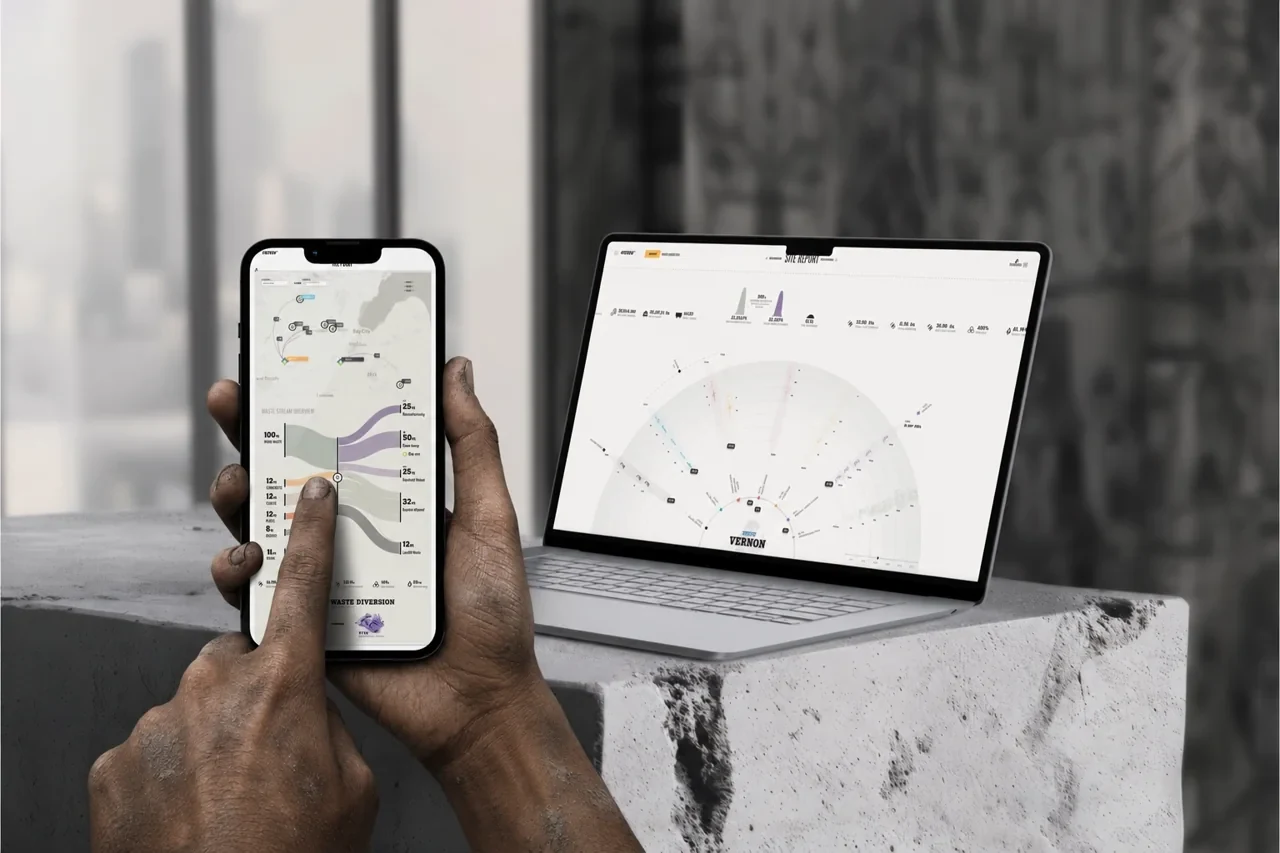
Recovered wood. Durable products. A carbon story backed by a material record.
 connects the material record from its job-site origin through collection, processing and conversion into biochar or other advanced carbon materials. Site records, weight tickets and conversion-batch information help project teams follow what was recovered, where it went and what it became.
Connect the origin and weight of accepted wood with conversion batches, material analysis, delivery and final placement. For concrete pilots, keep that record alongside the producer’s mix trials and approval for the intended use.
Landfill diversion, embodied-carbon reductions and carbon-removal credits are separate outcomes. Report each against its own evidence. Credited removal depends on eligible sourcing, measured carbon content, durability, lifecycle emissions and independent verification. Credit yield cannot be assumed from wood weight alone.
Start with the site schedule, expected clean-wood stream, receiving facility and concrete producer. Define the candidate lot, trial mix, performance criteria and reporting responsibilities before placement.
Discuss a projectExplore how pyrolysis can turn recovered wood into stable carbon for concrete and other durable materials. Let’s discuss what that could mean for your project.